
The sweet, earthy scent of willow filled the air as it steamed in a metal tub, rising gently into the cold winter morning in the heart of Appalachia. Surrounded by one of the oldest mountain ranges in the world, I stood on a small farm in North Carolina, my hands warming over water and wood, preparing to weave. It was winter break, yet instead of rest, I found myself immersed in a practice rooted in patience, artistry, and care.
I am Amber Horvath, an assistant professor in the Funeral Service Education program at Northampton Community College (NCC). I arrived at a willow farm in the heart of Appalachia seeking deeper knowledge of eco-friendly and sustainable burial practices. What I found instead was healing. From harvesting willow on the land to weaving a casket under the gentle and steady guidance of master weaver Sarah Lasswell, the experience reshaped how I understand death, care, and connection. This work is not only about returning to the earth or leaving no trace behind. It is about presence, community, and remembering that death, like life, is something we are meant to hold together.
The artistry of weaving is profound. Often viewed as an old-world craft, it carries timeless wisdom. For five days, six to seven hours each day, we wove. We worked with our hands, our bodies, and our stories. We paused for coffee, shared laughter, confided in the farm animals, and held space for one another. Those moments were not breaks from the work. They were the work. We were weaving more than willow. We were weaving meaning, connection, and care. This is where craft meets compassion, where deathcare becomes human again.
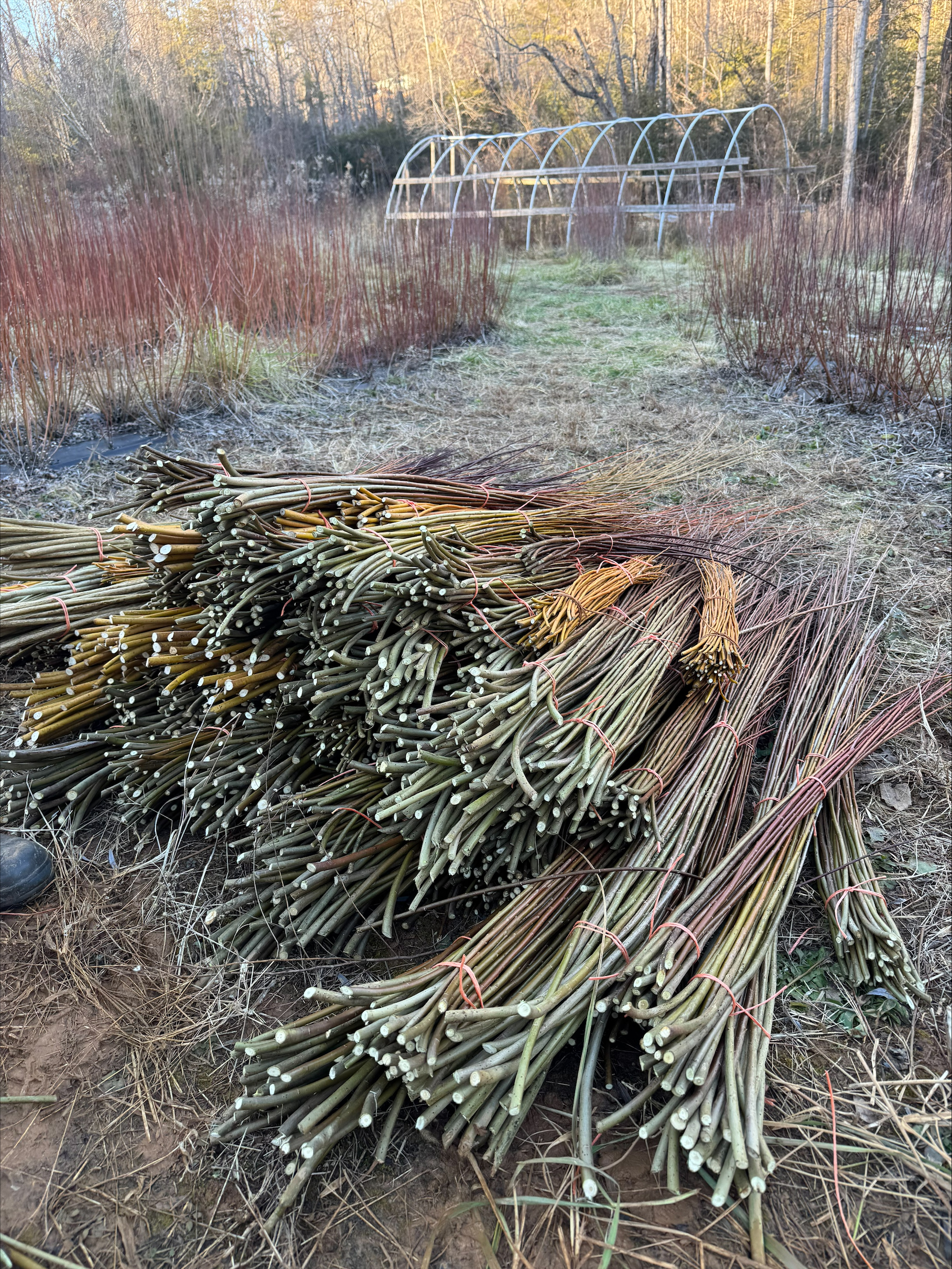
Being on the farm, immersed in the rhythm of the land, revealed how disconnected we have become from nature and from each other. Watching the reliance of the willow on the soil and witnessing the resilience of the Appalachian region as it continues to recover from the devastation of Hurricane Helene, offered a powerful lesson in endurance and hope. The land holds memory. It carries both grief and healing. And so do we.
Weaving taught me that we can sit with hard things. We can face discomfort, including conversations about death, without turning away. Working alongside others toward a shared purpose reinforced the power of human connection. This experience resulted in a casket that will be displayed at the college as a teaching tool for eco-friendly burial options. It also resulted in something far more personal. I was able to weave my own mother’s casket, an act that reshaped how I understand death, love, and legacy, and opened space for honest and tender conversations that are so often avoided.
This is what I hope to carry forward into my work and my teaching - to challenge a death denying culture, to show students that funeral service is not just technical skill, but sacred care, to teach them how to be a safe, compassionate presences for families in their most vulnerable moments, and to remind them that funeral service can be human again, whether through conversation, presence, or the quiet artistry of weaving.
This experience will ripple through my life in ways I am still discovering. It will shape me as a funeral home owner and as an educator. More importantly, I hope it will ripple outward to each student in the funeral service education program at NCC, inviting them to see death not as something to fear or avoid, but as something we can meet with honesty, creativity, and deep care.
This experience at Moss and Thistle Farm was made possible with the support of NCC's Dr. Dustin Briggs and the Professional Development Fund Committee. Without this funding, I would not have been able to travel to North Carolina or fully step into this work. What I expected to be professional development became something deeply personal, grounding, and transformative.
If you would like to see the willow casket in person, funeral service students will be holding a clinical embalming donor memorial service at 10 a.m. in College Center 220 on Wednesday, March 25. Those interested are also welcome to reach out to me directly to schedule a time to tour the funeral service classroom and experience the willow casket in all its beauty and intention. I can be contacted at ahorvath@northampton.edu.

Northampton Community College
3835 Green Pond Road
Bethlehem PA 18020
610.861.5300


